Ancient Site
Persepolis
Marvdasht, Fars
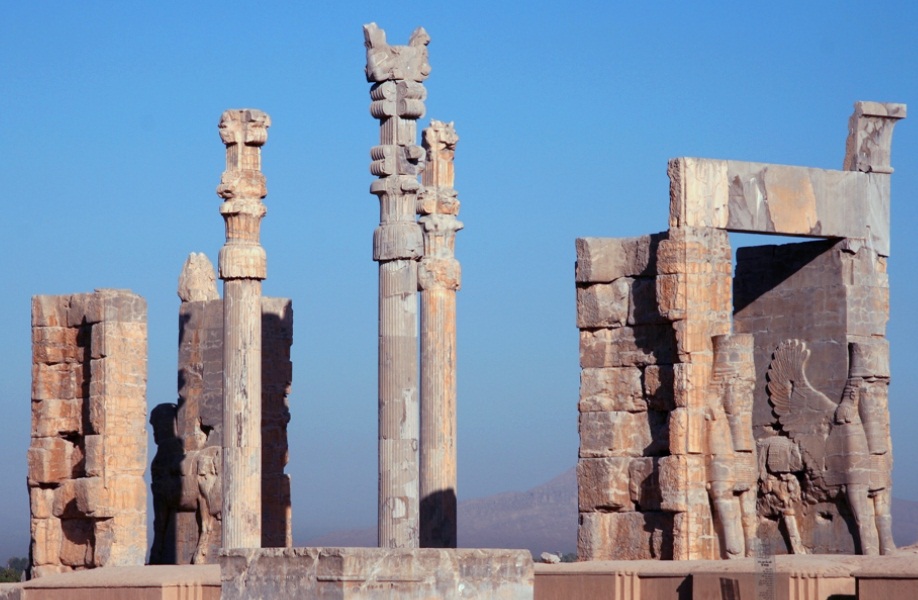
Persepolis, known in ancient Persian as Parsa and today as Takht-e Jamshid, is one of Iran's most important historical monuments and one of the great archaeological sites of the ancient world. It is located in the Marvdasht Plain of Fars Province, at the foot of Kuh-e Rahmat.
Construction of the complex began around 518 BCE under Darius the Great and continued under later Achaemenid kings, including Xerxes I and Artaxerxes I. Persepolis was built on a monumental terrace and developed into an extraordinary complex of palaces, ceremonial halls, gateways, stairways, and carved stone reliefs.
Among its most notable monuments are the Gate of All Nations, the Apadana Palace, the Tachara Palace, the Palace of Xerxes, the Treasury, and the Hundred-Column Hall. The detailed reliefs throughout the complex depict delegations from different peoples of the Achaemenid Empire, royal ceremonies, guards, and scenes that provide an exceptional insight into ancient Persian art and culture.
Persepolis represents one of the finest achievements of Achaemenid architecture, engineering, and artistic design and remains an essential source for understanding one of the largest empires of the ancient world.
The site was inscribed on the UNESCO World Heritage List in 1979 and is today one of Iran's most important cultural and historical destinations for both domestic and international visitors.
Persepolis is an essential destination for travelers interested in ancient Persian history, archaeology, architecture, photography, and world heritage.
Construction of the complex began around 518 BCE under Darius the Great and continued under later Achaemenid kings, including Xerxes I and Artaxerxes I. Persepolis was built on a monumental terrace and developed into an extraordinary complex of palaces, ceremonial halls, gateways, stairways, and carved stone reliefs.
Among its most notable monuments are the Gate of All Nations, the Apadana Palace, the Tachara Palace, the Palace of Xerxes, the Treasury, and the Hundred-Column Hall. The detailed reliefs throughout the complex depict delegations from different peoples of the Achaemenid Empire, royal ceremonies, guards, and scenes that provide an exceptional insight into ancient Persian art and culture.
Persepolis represents one of the finest achievements of Achaemenid architecture, engineering, and artistic design and remains an essential source for understanding one of the largest empires of the ancient world.
The site was inscribed on the UNESCO World Heritage List in 1979 and is today one of Iran's most important cultural and historical destinations for both domestic and international visitors.
Persepolis is an essential destination for travelers interested in ancient Persian history, archaeology, architecture, photography, and world heritage.